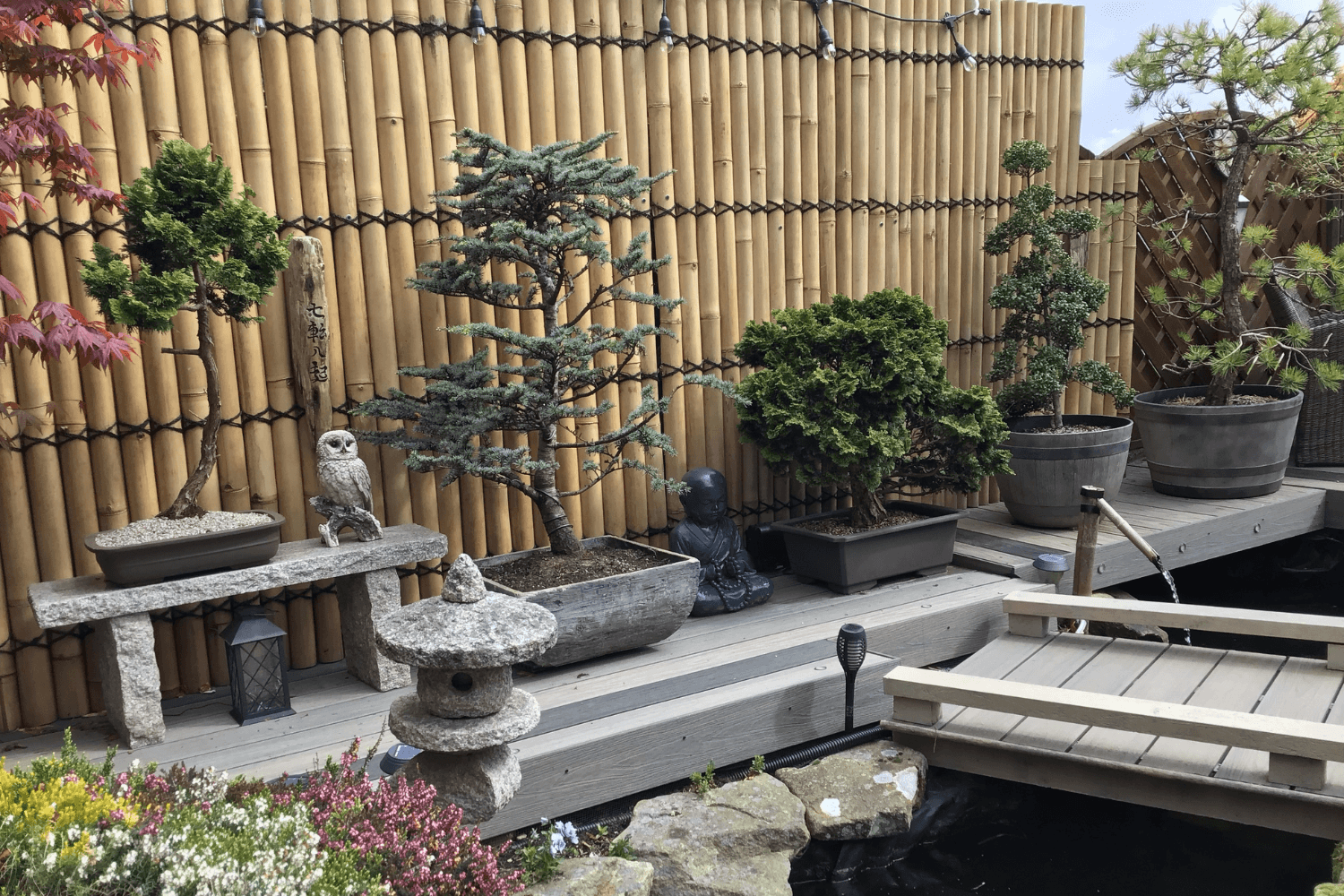
Top tips for a Japanese-inspired garden in the UK
ßJapanese gardens are having a moment in Britain. Four of the nine large show gardens at RHS Chelsea 2026 draw on Japanese design, and the RHS puts it down to more of us visiting Japan (a 43 per cent rise in British visitors in a single year) and a wider wish for calm, simple spaces away from screens. As Chelsea designer Kazuyuki Ishihara puts it, people are drawn to Japanese gardens because they ‘offer a sense of calm in a world that is becoming increasingly busy’.
The style also happens to suit the average British plot. It works better the smaller and quieter it gets, so a terraced back garden, a shady courtyard, or a corner you have never known what to do with are all good starting points. Moss, ferns, and acers thrive in damp, mild conditions, and the soft light of a grey day is closer to Kyoto than California.
You do not need a large budget or a full redesign. You need restraint, a few well-chosen materials, and an understanding of what the style is trying to do.
-
Start with the principles, not the shopping list
Japanese garden design rests on a handful of ideas: asymmetry, balance, symbolism, and enclosure. Everything else follows from those. Before you buy a single stone, decide what your garden is for. A place to sit and look? A route to walk through? A view from the kitchen window?
Traditional gardens combine three elements: stone, water, and plants, held together by a boundary. Pick a focal point for each and resist adding more. The most common mistake we see in UK gardens is trying to include everything at once.
Two ideas from this year’s Chelsea gardens are worth holding onto. Yohaku no bi is the beauty of empty space: the gap between things matters as much as the things themselves. Wabi-sabi is the acceptance of imperfection and age, which is why a weathered stone or a fence that has silvered over a few winters looks right, and a brand-new one can look wrong.
-
Use stone as the backbone
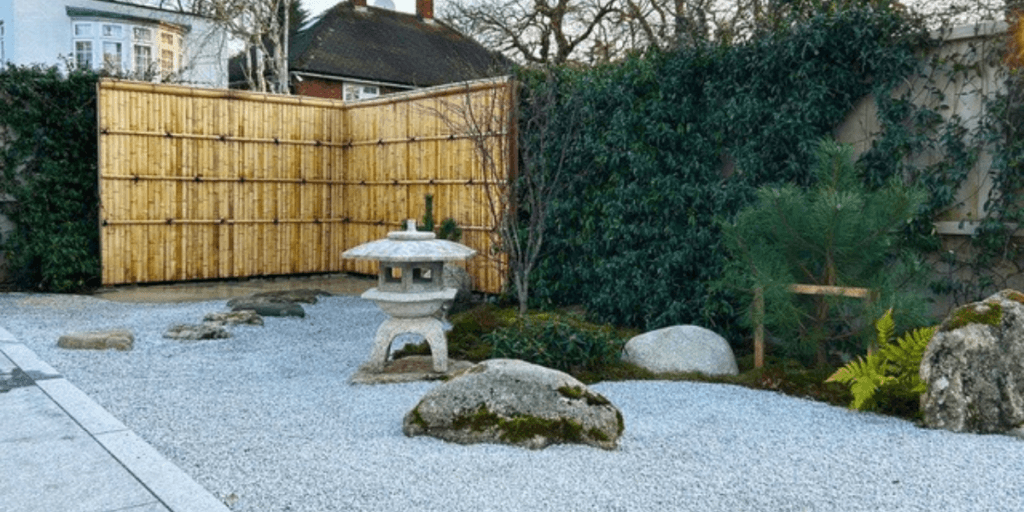
Stone gives a Japanese garden its structure and its stillness. Raked gravel represents water, larger rocks represent islands or mountains, and the arrangement is deliberately uneven. In a small garden, one or two well-placed boulders in a bed of fine gravel will do more than a dozen scattered pieces.
Choose natural, muted colours. Local stone tends to sit more comfortably than imported white marble chippings, and it weathers better. Sink boulders a third of the way into the ground so they look settled rather than dropped in.
-
Add water, even in a small space
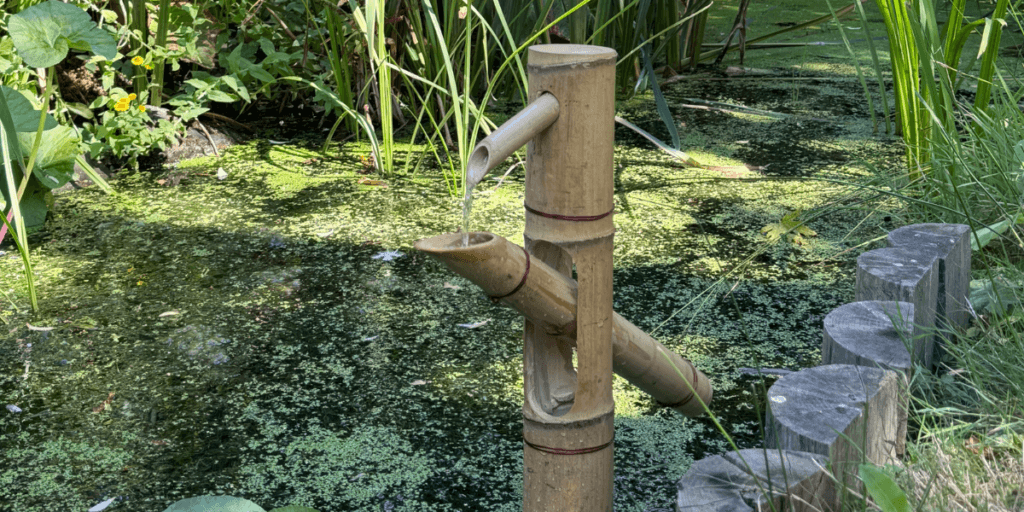
Water symbolises renewal and adds sound, which matters more than you might expect in a garden bordered by neighbours. You do not need a pond. A stone basin (a tsukubai) fed by a bamboo spout gives you moving water in less than a square metre.
The shishi-odoshi, or ‘deer scarer’, is the classic version: a pivoting bamboo tube that fills, tips, and knocks against itself with a gentle clack. It runs off a small pump and suits a courtyard or a spot beside a seating area.
If you do have room for a pond, keep the water feature in scale with the garden. A modest cascade over stones will look more authentic than a large fountain.
-
Choose plants that suit the UK climate
Japanese gardens rely on foliage, form, and seasonal change rather than a riot of flowers. Fortunately, most of the signature plants are happy in Britain.
Acers (Japanese maples) give autumn colour and prefer a sheltered, partly shaded spot out of drying winds. Pines and yew provide evergreen structure and can be clipped into the irregular, cloud-like shapes known as niwaki. Azaleas and rhododendrons offer spring blossom but need acidic soil, so check yours first. Ferns, hostas, and moss will fill shady, damp corners that other styles struggle with.
If you want to go beyond the familiar choices, the Chelsea gardens lean on a few less common plants that cope well in Britain: Farfugium (leopard plant) for glossy, rounded leaves in shade, Cyrtomium (Japanese holly fern) for evergreen structure, and Disporum (fairy bells) for a soft woodland feel.
Limit your colour palette. Green in many shades, with one or two seasonal highlights, is the look you are after.
-
Lay a path that slows you down
Japanese gardens are designed to be walked slowly, and the path does the work. Irregular stepping stones set slightly apart make you watch your feet and take in the garden one step at a time. A straight, paved route does the opposite.
Use large, flat stones with a natural edge and vary the spacing. Let moss or a low ground cover such as Soleirolia fill the gaps; in a damp British garden it will do so on its own within a season. Where the path meets a boundary or turns a corner, a short run of low bamboo edging or a single tied-pole barrier marks the change of direction in the traditional way.
-
Enclose the space with bamboo fencing
Enclosure is the principle that turns a corner of a garden into a distinct place. In Japan, fences and gateways mark the transition from the everyday world into the garden, and they are as much a part of the design as the planting.
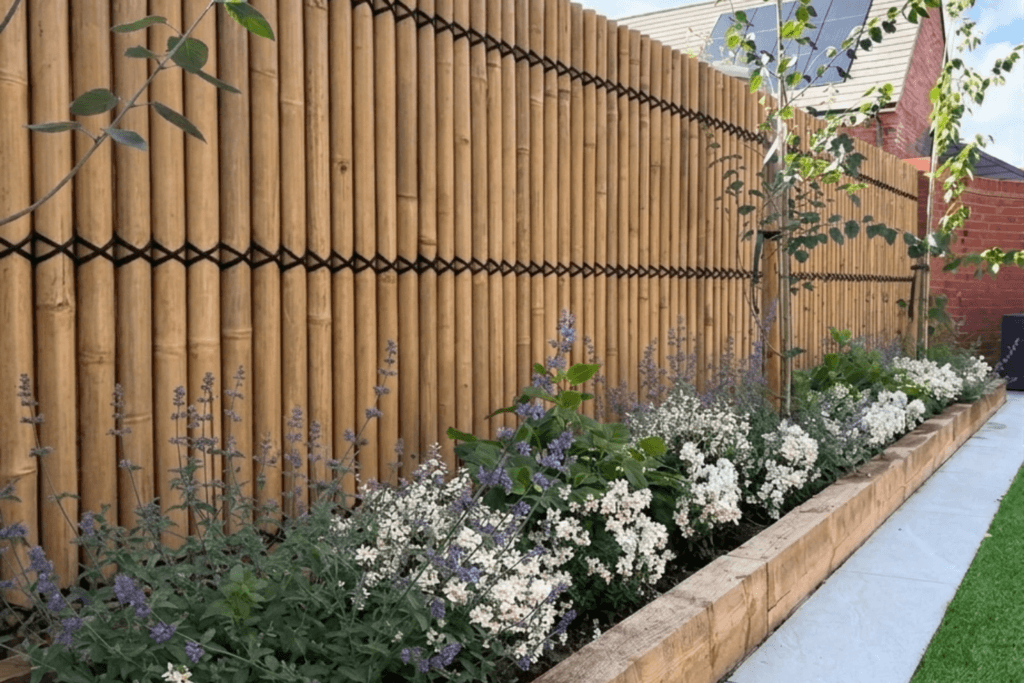
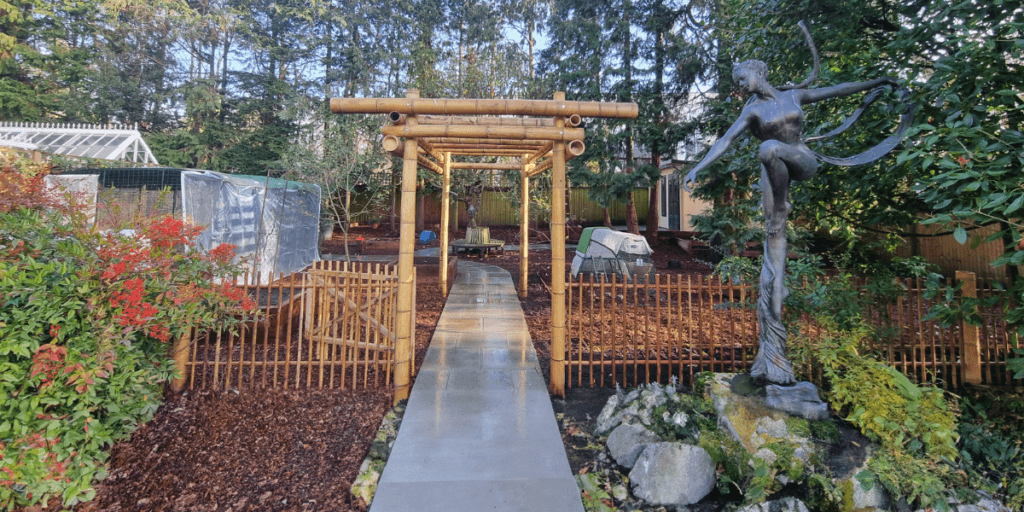
Bamboo is the traditional fencing material, and there are two routes. For a hand-built fence in the Japanese style, use straight natural poles at different thicknesses, tied with black twine in the classic yotsume-gaki (four-eyed lattice) pattern. This is a satisfying weekend project and needs no specialist tools.
For a faster result, our bamboo fence panels give you the same look in an afternoon. Each panel is 2m high by 1m wide, built from 60 to 80mm poles bound with black twine, and screws to an existing fence or to battens on a wall. Pre-drill the bamboo before you fix it, and sit the panel on a gravel board to keep it clear of wet ground.
You have two colours and two profiles to choose from. Tali is a natural golden bamboo that brightens a shaded corner and weathers to silver-grey over time; Java Black is a deep brown that makes acers and ferns stand out against it. Both come as whole round poles for a heavier, more traditional fence, or as half-round poles for a slimmer panel that suits tight spaces.
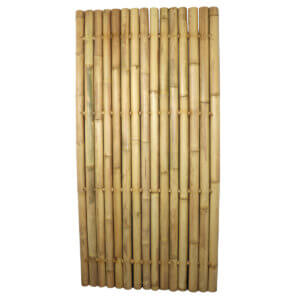
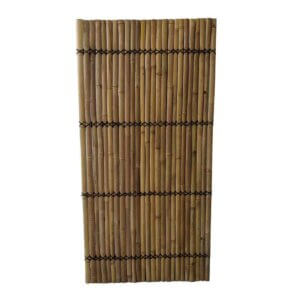
Tali Bamboo Fence Panel (Round Pole) Tali Bamboo Fence Panel (Half Round)
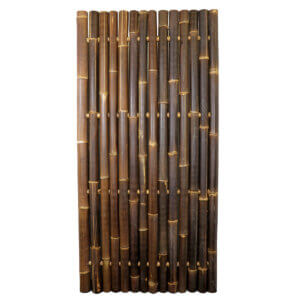
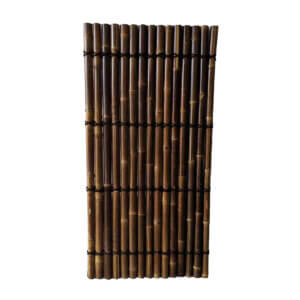
Java Black Fence Panel (Round Pole) Java Black Fence Panel (Half Round)
-
Frame the entrance
You do not need a full torii gate painted vermilion red. A simple frame of two upright bamboo poles and a crossbar, in proportion to the space, signals the threshold just as well. In a small garden, even a single tall pole beside the path does the job.
-
Borrow the view
Shakkei, or ‘borrowed scenery’, is the practice of using what lies beyond the boundary as part of the garden. A neighbour’s mature tree, a church spire, or rolling downs can all be framed by your fence line or a gap between panels. Look outward before you look inward, and place your enclosure to hide what you do not want and reveal what you do.
-
Think in odd numbers
When arranging rocks, plants, or lanterns, group in threes, fives, or sevens. Odd numbers feel natural and asymmetric; even numbers look staged. There is a whole tradition of rules for setting stones in the Japanese garden, but this one principle will get you most of the way.
-
Plan for a British winter
This is where UK gardens differ from the pictures. Wet winters mean gravel needs good drainage underneath, or it will green over and sink into mud. Lay a weed membrane and a sub-base of hardcore before you spread the top layer.
Bamboo fencing and poles are naturally weather-resistant, but you will extend their life by keeping the base out of standing water and applying a clear outdoor oil or sealant every year or two.
Frequently asked questions
Can I create a Japanese-style garden in a small space?
Yes, and it is often easier. Courtyard gardens (tsuboniwa) are a recognised Japanese style in their own right. One stone, one basin, one acer, and a bamboo fence panel is a complete design.
Does bamboo fencing survive UK weather?
It does. Bamboo is dense and naturally resistant to moisture, and with a yearly coat of outdoor oil a good-quality panel will last for many years.
Should I choose whole pole or half round panels?
Whole pole panels are heavier and give a fuller, more traditional look. Half round panels are slimmer and lighter to handle, so they suit walls, narrow passages, and DIY fitting.
Whether you are building a fence from poles or fitting a panel, we can talk you through the options for your garden. Browse our bamboo fence panels, or email us at sales@ukbamboo.com for advice.